
Craftsmanship Passed Down with Artisan Care
Our makeup brushes are centered on handcraft. Each brush goes through more than 30 processes including weighing bristles, cup-shaping, glue injection and more. The "cup-shaping" step requires artisans to tap molds by hand to arrange the bristle tips, taking several minutes to dozens of minutes with millimeter-level precision.
Because animal hair varies greatly in texture, machines cannot replace hand-shaping. High-end brushes rely on experienced artisans. Qingbrushfang carries forward the fine handcraft of Cangzhou to present professional brushes that are skin-friendly, soft and blend beautifully.
Cleaning & Care
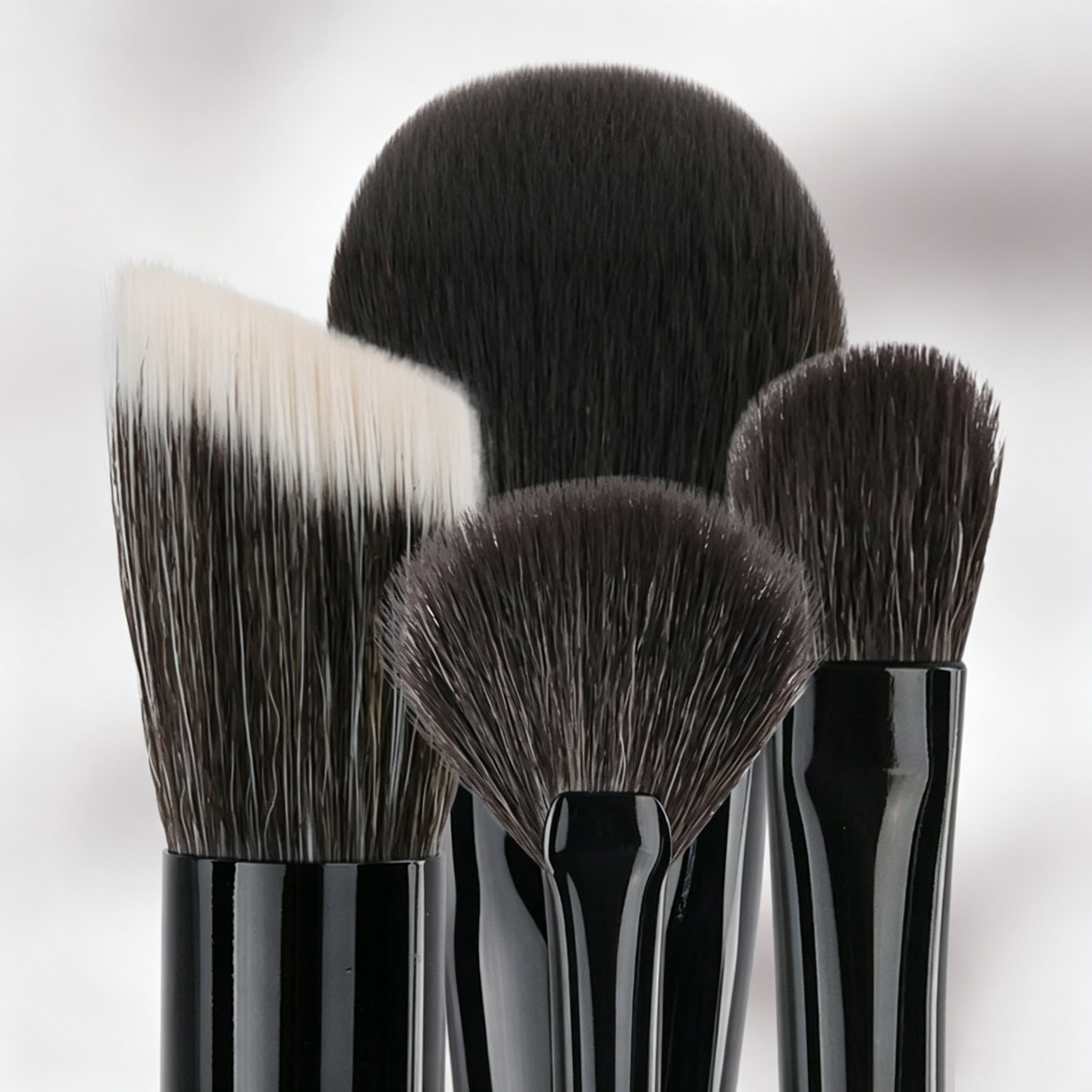
Cleaning Methods
Cleanser
For animal-hair brushes, we recommend professional brush cleanser or baby shampoo — alcohol-free, with weakly acidic or pH-balanced formula. Dilute the cleanser in warm water, pour it into a brush cleaning plate, place the bristles in and gently rub back and forth.
Possible Frizz
Animal-hair brushes may frizz. Please be gentle when washing. After washing, use your fingers to smooth the bristles from root to tip in one direction (to flatten the cuticles), then dry the brush bristle-down in a cool, ventilated place. Once half dry, you can use a net cover to hold the shape. For serious frizz, apply a small amount of hair conditioner or cashmere softener.
Cleaning Frequency
Water wash: wool, mink, raccoon and synthetic brushes once every 3-5 weeks; squirrel-hair brushes once every 5-7 weeks. If synthetic bristles have touched liquid products, wash after 1-3 uses.
Dry cleaning: wipe the bristles from root to tip on a brush cleaner, fiber cloth or clean tissue to remove color.
Dry cleaning: wipe the bristles from root to tip on a brush cleaner, fiber cloth or clean tissue to remove color.
Care & Common Issues
Will the Brush Shed?
Do not wash against the bristle direction or twist the bristles; this can loosen the structure and cause shedding. Do not use a hair dryer or expose to direct sunlight, as this can damage the bristles.
What if the Brush Frizzes?
Keep the brush head pointing downward throughout the washing process to prevent water from running into the base of the bristles, which can loosen the glue. After washing, dry the brush with a clean towel or tissue and put on a brush guard if possible (make sure to slide it from the handle toward the bristles) to shape the bristles and prevent frizz after drying.
What if the Brush Smells?
Newly made brushes may have a slight odor. If it bothers you, wash the brush and dry it bristle-down in a cool, ventilated place.
What if the Handle Cracks?
The handle of this product is made of solid wood. Please do not soak it in water during cleaning and use, to prevent the handle from cracking and affecting the product lifespan.